The Importance of Correspondent Banking
Correspondent banking is essential for banks in countries like Kyrgyzstan, as it allows them access to international financial markets and currencies. By establishing correspondent banking relationships, these banks can offer vital services—including international payments, trade finance, foreign exchange, and settlement—without needing a physical presence abroad.
The Central Asia Correspondent Banking Problem
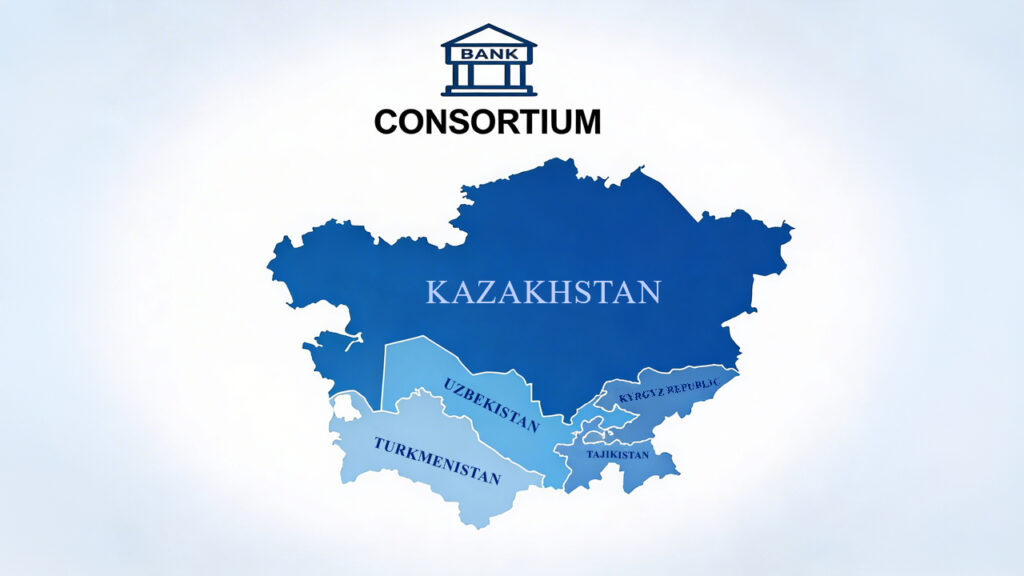
Central Asian banks have faced significant challenges in maintaining correspondent banking relationships, particularly against the backdrop of a reduction in cooperation with international banks after 2012. The main challenges stem from increasing regulatory and compliance requirements, as well as relatively low transaction volumes. Attempts to create new bilateral partnerships with neighboring countries have not resulted in quality services. Bilateral efforts by individual banks to resolve these issues have been inadequate because the core problems are systemic and affect the entire region, not just single institutions. A consortium of multiple banks offers a solution by using a central compliance utility to address compliance issues, pooling transactions to increase volume, and providing better services at a lower cost.
Exploring Solutions: The Bank Consortium Approach
In response to these challenges, Central Asian financial leaders—exemplified by discussions between the American Chamber of Commerce of the Kyrgyz Republic and U.S. regulatory authorities—have focused on creating bank consortiums dedicated to correspondent banking. This strategy involves multiple banks collaborating to develop a shared infrastructure for handling international payments, settlements, and compliance functions. Such a consortium pools resources, enabling participating banks to share the costs of infrastructure, compliance systems, and settlement platforms. This reduces the need for each bank to maintain separate accounts and compliance mechanisms, thereby lowering operational and liquidity costs.
In 2025, Altynai Asanova, Executive Director of the American Chamber of Commerce of the Kyrgyz Republic, consulted with the U.S. Office of the Comptroller of the Currency, a banking regulatory authority in Washington, D.C. She was advised to explore forming a consortium of banks focused on correspondent banking. At the B5 Plus 1 event held in Bishkek in February 2026, the consortium was informally discussed among bankers, banking advisors, and technology experts.
Bank consortiums are a well-established concept in the banking industry and have been used in many countries for joint funding of large projects. Specifically for correspondent banking, a consortium combines multiple banks to create a shared network or platform, making cross-border payments, settlements, and correspondent relationships more efficient. This cooperative model is increasingly being adopted, with successful examples using innovative technologies in various regions worldwide.
Advantages of Correspondent Banking Consortiums
There are several important benefits to forming consortiums. Banks can lower costs, expand their international presence, improve payment efficiency, and better manage risks such as compliance. Cost savings come from sharing infrastructure, compliance systems, and settlement platforms, which reduces the need for each member bank to maintain multiple nostro/ vostro accounts. This setup also decreases operational and liquidity expenses, as pooled resources enable more efficient use of foreign currency holdings, minimizing idle liquidity across various accounts. Furthermore, consortiums enhance global reach, allowing smaller or regional banks to access international markets through the collective network and decreasing reliance on a few major global banks.
The consortium model also expands the international reach of participating banks, especially smaller or regional institutions that might otherwise have difficulty accessing global markets. By sharing resources and networks, consortium members can carry out cross-border transactions more efficiently and lessen their dependence on a few large global banks. This collaborative framework improves risk management, boosts payment efficiency, and allows better use of foreign currency holdings by reducing idle liquidity in the system. Consequently, bank consortiums offer a practical and compelling solution to the challenges faced by financial institutions across Central Asia in correspondent banking.
Service Improvements and Risk Reduction
Consortium members benefit from shared platforms that streamline clearing and settlement processes, reduce intermediaries, and accelerate transaction speeds. Risk is lowered by diversifying counterparties, decreasing dependence on a single correspondent. Consortiums also tackle crucial compliance issues—such as anti-money laundering (AML), counter-terrorism financing (CFT), and sanctions risk—that have led to derisking. This is achieved through the use of advanced compliance tools and higher standards.
Superior Technology at a Reasonable Cost
A correspondent banking consortium provides technological benefits that individual banks cannot achieve alone. Member banks can jointly invest in modern payment infrastructure, like blockchain-based settlement platforms, reducing individual costs. This allows banks to move away from outdated legacy systems, which often limit correspondent banking capabilities.
Global Examples of Correspondent Banking Consortiums
There are currently eleven operational consortiums and four in development worldwide. These consortiums offer improved correspondent banking services by utilizing various models and innovative technologies to overcome traditional challenges and deliver more affordable services. Most of these consortia provide a comprehensive range of services, including some specialized ones focused on trade financing or AML/ CFT compliance. Banking groups have established consortia in nearly every region, including Southeast Asia, Africa, the Middle East, Europe, and the Caribbean.
Moving Forward
Central Asian banks, like many others worldwide, have faced derisking and the loss or reduction of correspondent banking services. In response, they have secured replacement services that have proved unsatisfactory. Beyond these subpar solutions, international trade has also been impacted. The creation of a correspondent banking consortium not only addresses compliance issues but also ensures that member banks can reconnect globally and benefit from better services at reasonable costs.
In the upcoming weeks, the American Chamber of Commerce (AmCham) will host a Zoom meeting to discuss the steps involved in establishing a Central Asia consortium. This meeting will be announced to other organizations across Central Asia. Due to the complexity of forming a consortium, a feasibility study is necessary. This study will evaluate whether creating a correspondent banking consortium is viable, beneficial, and sustainable from financial, operational, legal, and strategic viewpoints.
While the exact cost for establishing a consortium cannot be established at this time, a very important question should be: what are the cost savings to each bank? A consortium eliminates duplicate infrastructure, through shares compliance reduces regulatory costs, frees trapped capital, cutting each bank’s cross border costs structure by 40-70% while improving global access to global payment corridors.
Author: James M. Wright
Bank advisor