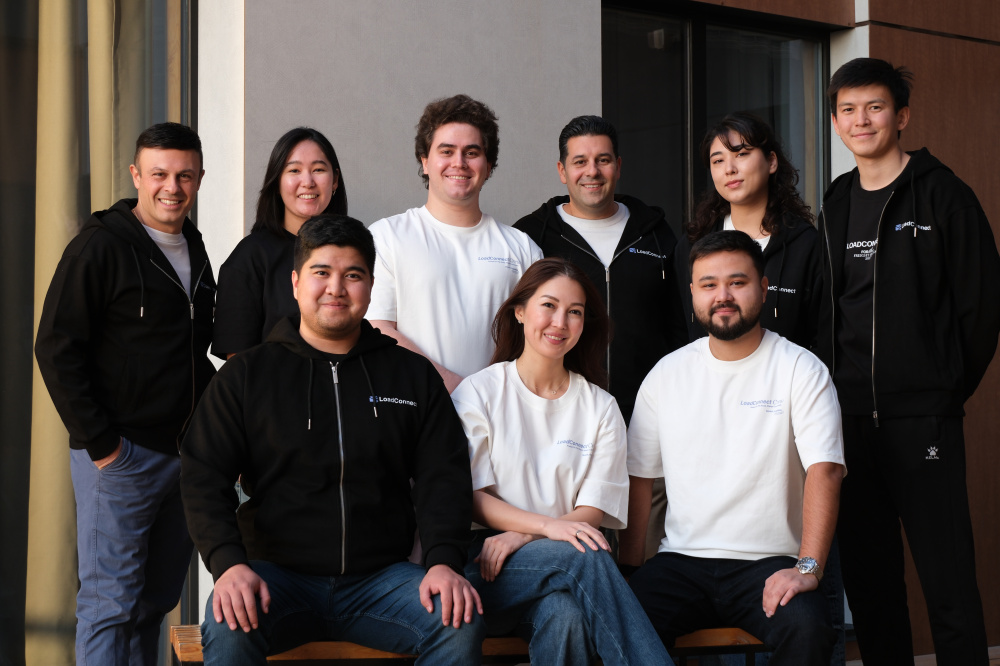
LoadConnect didn’t start with a business plan. It began with a simple desire to help a friend — a truck dispatcher overwhelmed by routine and constantly missing profitable loads.
Today, dispatchers around the world use the product. It has already surpassed 15,000 downloads, and the team behind it operates from Kyrgyzstan.
In this interview, the founders of LoadConnect share how a personal problem turned into a product for the global market — and why in logistics, speed and trust matter more than flashy technology.
— For someone outside the logistics industry: what is LoadConnect and why is it needed?
Faruh:
LoadConnect is a smart assistant for truck dispatchers in the United States and Canada. It helps them find and book profitable loads faster — reducing routine work and increasing revenue.
Ulukbek:
Simply put, it’s a personal assistant for dispatchers. It takes over routine tasks: calculations, verification, and email communication. What used to take hours now takes seconds.
— What tasks do you automate first and foremost?
Faruh:
A dispatcher’s job is essentially sales. Their main objective is to respond to a profitable load as quickly as possible. In this market, speed is critical — while you’re calculating and drafting an email, the load may already be gone.
Previously, dispatchers manually copied data, wrote emails or called brokers, while simultaneously calculating the trip’s profitability. With LoadConnect, everything happens in one window. We provide ready-made templates, rapid-response tools, and automated profitability calculations.
— What exactly do you calculate automatically?
Faruh:
We account for the driver’s location, the distance to the pickup point, toll roads, fuel costs, and calculate the final rate per mile (RPM). As a result, the dispatcher immediately sees whether the load is truly profitable. They can instantly send an email or call the broker.
Another important component is security. Fraud is common in the U.S. logistics industry, and we help dispatchers assess in advance whether a particular counterparty can be trusted.
— Who is behind LoadConnect? Tell us about the team roles.
Faruh:
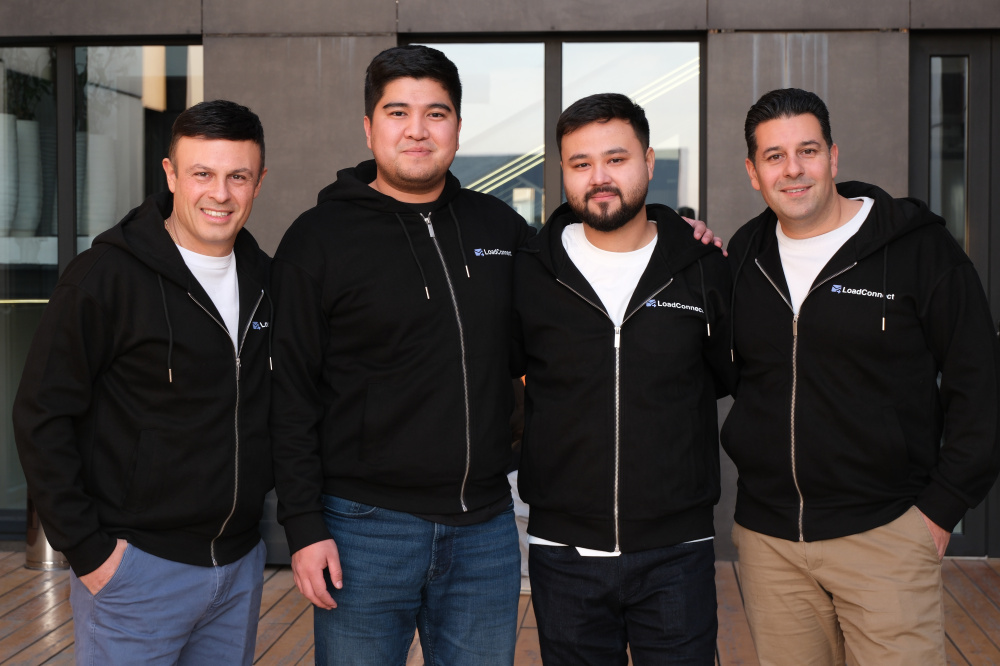
We are co-founders. Ulukbek is the visionary and the backbone of the product — technology, architecture, logic. I focus on positioning the idea, sales, partnerships, and scaling.
Ulukbek:
At the early stage, we did everything ourselves: product development, support, sales. A classic startup story — we even metaphorically “cleaned the floors” ourselves. But that’s how you truly understand your product.
— How did the idea for LoadConnect come about?
Ulukbek:
I was working as a programmer in Dubai but frequently traveled to Kyrgyzstan. Many of my friends here were working as dispatchers for the U.S. market. The idea was born from a very simple, everyday situation.
I was sitting with my friend Azret — we were about to go out and relax — when at the last moment he said, “Wait, I urgently need to close one load.” That’s when I saw his work from the inside: dozens of repetitive actions, constant calculations, copying data, emailing brokers — and in most cases, silence in response.
He kept doing the same thing over and over again: opening the load board, calculating trip economics, writing an email, waiting. A few minutes would pass — and the load was already gone. His entire job was an endless routine that required attention and speed but left almost no room for strategic thinking.
It became obvious to me that all of this could be automated. I built the first solution in just a couple of days for him and his company. Working closely with Azret helped us clearly articulate the real market problem and test it in practice. When I saw his reaction — and how much time it saved — I realized we had hit a genuine pain point.
At first, the product was used within one company. Then several others joined. It operated in that format for about a year before Farukh and I seriously began thinking about scaling.
Faruh:
At that time, we were searching for a bigger idea and were going through YC Startup School. And suddenly we noticed something: users literally couldn’t work without LoadConnect. They would message us in panic if it became unavailable. For me, that was the key signal — we were solving a truly important problem.
That’s when we decided to scale LoadConnect. Within a short time, the product started growing, and users from the U.S., Europe, and Canada joined. Most importantly, we began receiving constant feedback. From the very beginning, we built the team around close communication with users — because they show you best where the product needs to evolve.
— What challenges did you face at the very beginning? What was the most difficult part?
Ulukbek:
The most difficult stage was transforming the product. Initially, it was built for one company — essentially for one user. When we decided to bring it to market, we realized this was an entirely different level of complexity.
We had to rethink everything: architecture, automation, packaging, payments. At that time, we had no website, no international payment system, no legal entity in the U.S. We simply didn’t understand all these nuances — and they turned out to be the most painful part.
I clearly remember that period: for about two weeks, I was completely immersed in the product. Studying documentation, assembling everything piece by piece, barely sleeping. The transition from “a solution for a friend” to a full-fledged market product was the hardest phase for me.
— Has the product changed significantly since then?
Ulukbek:
Very significantly. In fact, only the core idea remains from the first version.
Faruh:
Even the name was different back then — it was DATconnect.
Ulukbek:
Yes, that was a working title. Later we rebranded it as LoadConnect and began building it as a standalone brand.
— What did you feel when the first paying users appeared?
Ulukbek:
Honestly — shock. I didn’t even have my own money for minimal marketing. I borrowed from my sister and brother to pay for the server and try a small ad campaign.
A few days later, I saw in analytics that people were downloading the product. Then one user subscribed. I couldn’t understand whether it was a real customer or a mistake. I emailed him, asked for feedback — and he suggested a call.
During the conversation, he said: “You solved my main problem. I’m securing loads faster and earning more.” That was a very powerful moment. I immediately told Faruh — we were both shocked that people were willing to pay for the product on their own, without persuasion.
— In numbers: how much time does LoadConnect save?
Ulukbek:
Previously, processing one load took several minutes: opening the load board, calculating trip economics, writing an email to the broker. In a day, there could be 30–40 such requests — that’s one and a half to two hours of pure routine.
Now, the dispatcher immediately sees a list of loads with profitability calculations. Each one has a button — click, and the email is sent automatically. We handle all the calculations. On average, a dispatcher saves two to three minutes per inquiry — which adds up to several hours of work time saved every day.
— What is the current situation in the company? How are you growing, and what are your key metrics?
Faruh:
LoadConnect has now surpassed 15,000 downloads. We are growing rapidly while continuing to develop not only our core product but also several new solutions that we plan to announce soon.
Importantly, we have strong organic growth. The combined traffic across our products is approaching one million visits per month. And all of this is being built by a team based in Kyrgyzstan — while the product is used by dispatchers worldwide. LoadConnect is evolving beyond a simple browser extension and gradually becoming a full-fledged platform.
— When can we expect new announcements?
Faruh:
Soon. No specific dates yet, but we’re close.
— Do you have well-known clients or partners?
Faruh:
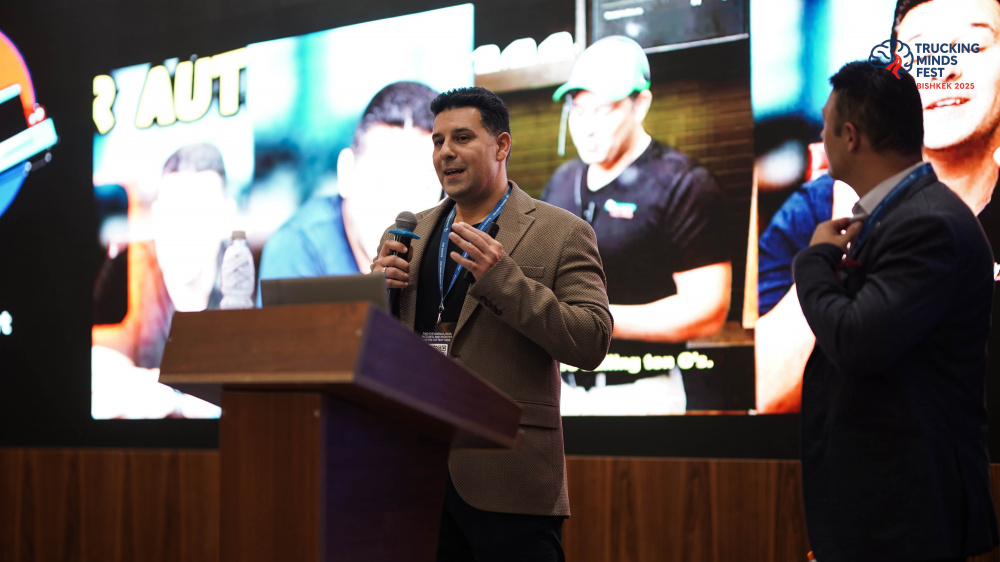
Recently, we announced a partnership at a major industry event — Trucking Minds Fest, held in Bishkek at the initiative of the Kyrgyz-American Association for the Development of Logistics Services (KAADLS).
LoadConnect co-organized the event together with the dispatching company Supreme Group. We brought partners from Canada, Uzbekistan, Moldova, and Kazakhstan and gathered more than 550 participants interested in the North American trucking industry.
At the same event, we announced cooperation with some of the most well-known influencers in the trucking segment — Ronen Gilkarov and Roman Yakobov, along with their company ET Transport. Across all platforms, they have more than 500,000 followers — a very significant audience for such a niche industry.
Ronen Gilkarov officially joined the team as Co-founder and Chief Marketing Officer, fully leading the marketing direction of LoadConnect.
— How does the state of the U.S. market — growth or decline — affect you?
Ulukbek:
In reality, our product is not highly dependent on market cycles. Freight in the U.S. has always existed and will continue to exist — it’s fundamental to the economy. LoadConnect supports dispatchers in both growth and downturn cycles because it is fundamentally about efficiency.
— Given the scale of the U.S. market, why is there still so much manual work and so little automation?
Faruh:
This was one of our key insights. When we first came to the U.S., we expected to see a highly technological industry — autonomous trucks, full automation. But in reality, many processes are still handled via fax.
We realized that the U.S. freight market is built on relationships. You can automate certain stages, but at its core, it runs on trust and personal connections. Habits and interaction models change very slowly.
Competition is increasing, and companies are adapting. But technology here is not meant to replace human relationships — it should enhance them.
— How does LoadConnect fit into that logic? Does it disrupt personal relationships?
Faruh:
On the contrary. We don’t break existing habits — we automate routine tasks. This frees up time for dispatchers to build relationships, negotiate, and provide better service.
We had a case where, thanks to LoadConnect, a dispatcher freed up enough time to strengthen relationships with brokers — even through personal gestures of appreciation. As a result, he began receiving even more profitable loads. We removed the boring part of the job and created space for human interaction.
— How do you see the product evolving over the next five years? Is it about replacing people or empowering them?
Ulukbek:
Our vision is not to replace people, but to amplify them. If today a dispatcher manages five trucks, we want them to effectively manage ten, fifteen, or even twenty with our product.
We’ve had users tell us they were burning out before LoadConnect because of endless routine work. After automation, their work became easier. They had time to think about strategy, relationships, and growth. That’s our goal — to give dispatchers more control, more income, and less burnout.
— What are LoadConnect’s plans for the next year? Expanding the product or entering new segments?
Ulukbek:
All of our plans remain within logistics. We are not diversifying into other markets — our focus stays entirely within this industry.
— Will there be new features within LoadConnect itself?
Faruh:
Yes. Everything we release will develop under the LoadConnect umbrella. We are building an ecosystem of solutions, not just a single tool.
— When can we expect announcements?
Ulukbek:
Competition in the market has increased significantly. New solutions have appeared that resemble our product and replicate its core mechanics. We were the first to systematically solve this problem and essentially created this product category.
Today, we maintain leadership in users, traffic, and other key metrics. For that reason, we prefer not to disclose detailed plans prematurely.
— Then what differentiates LoadConnect from competitors?
Faruh:
As Ulukbek mentioned, we were the first to solve this market problem in a systematic and effective way. Around LoadConnect, an entire product category has formed — one that now attracts users, investors, and attention from the entire trucking industry.
And it’s especially important that this trend was initiated by founders from Kyrgyzstan.
— What do users most often name as the main reason they stay with you?
Faruh:
Stability and quality. We deliberately avoid price dumping. There’s an approach where companies capture the market through low pricing and aggressive marketing. But we believe a quality product should not be devalued.
When you compete purely on price, users stop perceiving value. We focus on reliability, security, and predictability. People try different solutions — but they return to us and are willing to pay more for the confidence that everything will work consistently.
— The U.S. freight market is often considered risky. How does LoadConnect help dispatchers protect themselves from fraud?
Faruh:
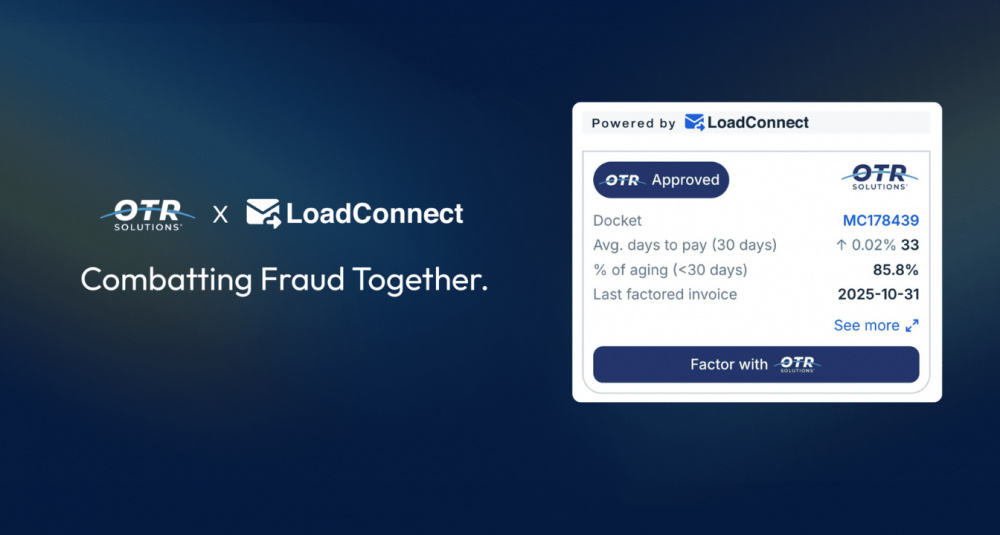
That’s exactly why we partnered with one of the largest factoring companies in the U.S. — OTR. For them, this was a rare case: integrating with a product built by founders outside the United States. They reviewed our product, traction, and team — and chose to trust us.
Through this partnership, OTR provides us with data on brokers and counterparties: payment discipline, reliability scores, and interaction history. We officially display this information directly inside LoadConnect.
In essence, the platform has become a gateway of trust. Users immediately see who they’re dealing with and can avoid serious financial losses.
— Were these data previously available to dispatchers?
Faruh:
Yes, but in a fragmented way. Dispatchers had to visit separate portals, manually check companies, and spend additional time. Moreover, fraudsters learned to manipulate contact details — using lookalike email addresses and fake domains. As a result, people were losing $20,000–30,000 on a single load.
Ulukbek:
We solve this at the process level. LoadConnect integrates with email and load boards, and we immediately indicate whether it’s safe to work with a specific counterparty. If there’s risk, the system warns the user before a decision is made.
— So you’re making the dispatcher’s work safer?
Ulukbek:
Exactly. We focus on quality and real value. Users see the benefit not in promises, but in daily use. That’s why they choose LoadConnect — and stay with us.
— If you were starting this journey again, what would you do differently? What mistakes wouldn’t you repeat?
Faruh:
Honestly, I wouldn’t change anything. We had experienced mentors who advised us on how to grow faster, where to raise investment, how to scale. We listened — but at that moment, we simply weren’t ready. Not mentally, and not strategically.
We were focused on one thing — building a product people truly use. We deliberately postponed conversations about fundraising and growth for the sake of growth. Looking back, that was the right decision. Without going through that path — with all its doubts and mistakes — we wouldn’t be where we are today.
Ultimately, it’s not the destination that matters most — it’s the journey.
— Would you change anything?
Ulukbek:
I would probably leave my main job earlier. For a long time, we worked on the product part-time alongside our full-time jobs, waiting for the “perfect moment” — stable user flow, stable revenue.
If I could go back, I would decide sooner to go full-time and focus entirely on the product.
— How much time passed from the first version for a friend to the market launch?
Ulukbek:
The idea appeared in 2022. I built the solution for a friend, and it worked within his company for about a year. In early 2023, Farukh and I decided to bring the product to market and began working on LoadConnect seriously.
Faruh:
Roughly speaking, the active journey of the project started on January 25, 2023 — and continues to this day.
— Final question. What advice would you give to those just starting their journey in startups?
Ulukbek:
At the beginning, we learned a lot — we went through YC Startup School and watched every lecture. If you’re working with a co-founder, it’s important not just to watch, but to discuss each topic and apply it to your real problems.
The main lesson we learned: the goal is not the idea or the platform — it’s solving a specific pain point. That pain doesn’t have to be global or immediately profitable. If the user genuinely feels relief and enjoys using your solution — you’re on the right path.
Faruh:
I would add two things. First, don’t think too big from the start. Find a small, clear problem and solve it well — that’s enough to begin.
Second, keep your team small at the early stage. The focus must be entirely on the product. For a long time, it was just the two of us — marketing, development, customer communication. That allows you to feel the product as a whole and understand it at every level. For a startup, that’s critical.